• Condos Spring Back to Life in Toronto Real Estate Market

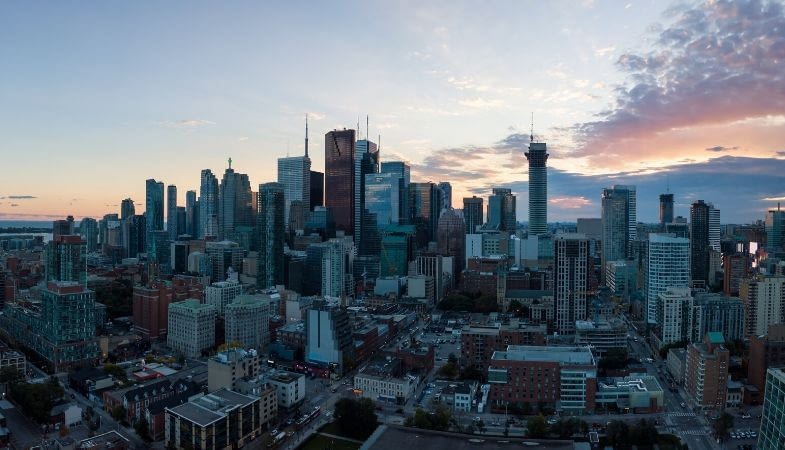
    For years, one of the hottest segments of the Toronto real estate market was condominiums. The skyline of the Big Smoke had been lined with construction cranes and glass towers rising on nearly every corner of the downtown core. Indeed, views of the city from Centre Island have vastly changed over the last decade. The upward trajectory suggested that there was no slowing down for red-hot condos.

    Then, the coronavirus pandemic struck and everything was turned upside down, including the Canadian real estate market. Suffice it to say, Toronto’s condominiums took a downturn in 2020. While sales activity was moderate, prices had notably slumped. The reason? Supply had outpaced demand amid families leaving the city, up-sizing their living situation by moving into a detached or semi-detached home, not to mention the temporary ban on Airbnb units. But all this may soon be ancient history.

    Could it be morning again in the Toronto condo market?

    Now that the COVID-19 public health crisis is subsiding, the Toronto condo market is returning to life, rebounding to its best level in about three years. With renewed demand and historically low interest rates, residents will likely witness even more construction cranes dotting the skyline of North America’s fourth-largest city.

    The Toronto Condo Market Springs Back to Life

    According to the Toronto Regional Real Estate Board (TRREB), residential sales for Toronto condominiums soared 159.1 per cent year-over-year to 1,881 units in May.

    The average price of a condo unit in the 416 area rose at an annualized rate of 0.1 per cent to $694,152. However, TD Bank believes that benchmark prices are doing even better than industry data, pegging the number at 10.6 per cent from the same time a year ago. This would be the strongest gain since 2018.

    “Though overshadowed by the superheated detached market, condos are quietly making a comeback,” said TD economist Rishi Sondhi, in an interview with the Financial Post. “Should condo sales consume a rising share of the market moving forward (as we expect), downward pressure on average home prices from these lower-priced units would be applied.”

    Overall, it has been a great start to the year for the city’s condo industry. In the first quarter, sales advanced at an annualized rate of 79.7 per cent to 9,398 units. During the January-to-March period, the median sale price for condominium apartment units climbed 1.4 per to $592,000 compared to the same time last year.

    So, what could be driving these positive trends?

    The Ins and Outs of the Toronto Condo Market

    Across all property segments, demand has been strong in 2021. While this was business as usual for detached and semi-detached homes throughout the pandemic, demand has dwindled within the condo market over the course of this year.

    TRREB President Lisa Patel explained in a news release that confidence in the post-pandemic economic recovery is creating a splash in the Toronto real estate market and the broader Canadian housing sector. The other crucial aspect has been historically low borrowing rates, with the Bank of Canada (BoC) signalling that it is unlikely to raise interest rates until the second half of 2022.

    Although Patel believes that “the absence of a normal pace in population growth” has been a factor in these demand slumps, the federal government will soon relax tough border restrictions, reigniting immigration levels. For the last decade or so, the population boom in the city centre and Greater Toronto Area (GTA) was one of the biggest drivers of the Toronto condo market.

    As the public health crisis wanes, one of the top questions is: What about the short-term rental market? The province of Ontario banned Airbnb units in the early days of the pandemic in response to the surge in infections. This led to a substantial drop in rental prices of as much as 20 per cent since owners had to list their suites as long-term rentals. It might seem like conditions will return to normal in the coming months, but city hall adopted new rules.

    This past spring, the municipal government approved three new rules that experts suggest could hurt the short-term rental industry in one of the world’s hottest real estate markets. The measures?

    • Registration of Airbnb units and a $50 annual renewal fee.
    • A four per cent municipal quarterly tax.
    • Airbnb must be your primary residence.

    Ultimately, moving forward, it will be a different type of new normal for the condo market.

    Is Toronto on Fire Again?

    The Globe and Mail ran a piece at the end of May showcasing the selling traits of several condominiums. For example, a 754-sq.-ft. one-bedroom-plus-den-unit sold for $669,908 after just one day on the market, a little more than $10,000 above the asking price.

    Put simply, the Toronto condo market is now experiencing the same characteristics as the broader real estate market: bidding wars, above-asking price transactions, and sky-high prices. Hopeful urban homebuyers anticipating a COVID-discount on a 2 bedroom condo in the heart of the city, may be sorely disappointed!


    Courtesy of REMAX.ca
    Canadian Housing Market Sees Sales Volumes Finally Cooling

    Has the Canadian housing market reached its zenith? Will the red-hot housing market begin to cool down? Will new homebuyers get a chance to achieve the Canadian dream of owning property? As Canadian real estate skyrockets, reporting record-breaking figures month after month, the list of questions just keeps on growing!

    It has been a raucous 16 months in Canada’s housing industry. From major urban centres to rural communities, sales activity and home prices have been soaring to unprecedented heights. Historically low interest rates, strengthening demand, and lacklustre inventory levels – there have been many factors accelerating the housing affordability crisis. This had defied conventional thinking in the early days of the coronavirus pandemic, with some anticipating a collapse of the Canadian real estate market. Instead, the housing sector has become so intense that bidding wars, bully offers, and blind bidding have infected small towns, suburbs, and cottage country.

    The latest data suggest that the Canadian housing market may have finally peaked. Across the country, price growth has slowed down, residential sales have declined, and more supply is coming to market. Moreover, expectations of higher interest rates and stress tests could be additional factors that could spawn a noteworthy slowdown.

    This could be the lifeline that many young families had been hoping for in the post-pandemic recovery.

    Sales Volumes Finally Start to Cool in Canadian Housing Market

    According to the Canadian Real Estate Association (CREA), national residential sales tumbled 12.5 per cent month-over-month in April. The MLS® Home Price Index (HPI), which is considered a more accurate representation of average and median prices, rose 2.4 per cent in April.

    Indeed, on an annualised basis, home sales and prices have soared 256 per cent and 41.9 per cent, respectively. But these figures are skewed since the nationwide real estate market was at a standstill at this time a year ago. This is why, when examining small communities in the Ontario real estate market or Atlantic Canada, that sales and prices are up as much as 600 per cent.

    Industry experts are now concentrating on month-over-month data to garner some insight into what could be happening as the summer progresses. But, for now, the consensus is that the significant gains of the last year are unlikely to be replicated moving forward.

    “While housing markets across Canada remain very active, there is growing evidence that some of the extreme imbalances of the last year are beginning to unwind, which is what everyone wants to see happen,” said Cliff Stevenson, Chair of CREA, in a news release.

    That said, Stevenson made a good point that the fresh lockdowns and restrictions imposed in the last few months might force the spring market into the summer, igniting another round of pent-up demand.

    “The result is that a relatively more ‘reasonable’ set of numbers in April 2021 looks both way up or way down depending on what crazy part of the last year you compare them to, but the correct interpretation of those big numbers is that the April housing numbers came in somewhere in between those extremes, which is a good thing,” he stated. “While we still have a ways to go, measures of market balance have finally turned a corner and monthly price growth has decelerated. I believe we’ve all wanted to see the temperature turned down on this market after the last year and it looks as though that is finally happening.”

    Moreover, fresh housing stocks keep getting injected into the market. New numbers from the Canada Mortgage and Housing Corporation (CMHC) show that housing starts advanced 2.53 per cent to 279,055 units. The six-month moving average is heading in the right direction, possibly alleviating tight conditions and setting the tone for the remainder of the year.

    Inside the Canadian Housing Market

    Let’s take a look inside the Canadian real estate market and see how individual markets are performing:

    Vancouver (April | MoM)

    • Residential Sales: -14 per cent
    • Benchmark Price: +2.6 per cent to $1,152,600

    Edmonton (April | MoM)

    • Residential Sales: +17.6 per cent
    • Residential Average Prices: -0.4 per cent to $389,773

    Toronto (April | MoM)

    • Residential Sales: -12.7 per cent
    • Average Price: 0% at $1,090,992

    Montreal (May | MoM)

    • Residential Sales: -14 per cent
    • Median Prices for Single-Family Homes: +3.11 per cent to $496,000

    Halifax (May | MoM)

    • Residential Sales: -12.5 per cent
    • Average Price: +2.57 per cent to $363,300

    Will New Developments Douse the Fire? 

    At the end of its June policy meeting, the Bank of Canada (BoC) decided to leave interest rates unchanged at 0.25 per cent. According to the central bank’s guidance, rates are expected to remain unchanged until the second half of next year. The institution is forecasting a robust economic rebound this summer, alluding to reopening, greater vaccination rates, and higher consumer spending.

    Does this mean it is all quiet on the western front? Not exactly.

    The new stress test level went into effect on June 1, which will make it harder to qualify for a mortgage. The federal government increased the minimum financial threshold that anyone applying for a mortgage must meet to 5.25 per cent, which is two per cent above borrower’s mortgage rate.

    This move will reduce the number of qualified borrowers and is projected to cool down the Canadian real estate market. With signs that the housing sector is on the road to cooling down, this could further douse the flames. But will this prevent another barrier to entry for new homebuyers? While price growth will not accelerate as it did a year ago, home valuations across the country are at record highs, making it harder for many households to purchase a property.

    Meanwhile, Ottawa is expected to relax border restrictions soon, facilitating immigration and the movement of people. Since immigration levels were projected to top 400,000 this year, an influx of even half that figure would add pressure to a market with limited supplies.

    What’s Next for Canadian Real Estate?

    The Royal Bank of Canada’s senior economist Robert Hogue did an excellent job of succinctly summarizing the state of the Canadian real estate market recently: the mania has toned down, fewer homeowners are listing homes for sales, homebuyers are declining faster than sellers, and a reversal of the “unsustainable spike” is unfolding.

    Real estate agents and market analysts alike will undoubtedly hone in on the summer months like a guided missile!


    Courtesy of REMAX.ca

    10-Step Guide to Selling Your Home

      Selling your home can be an incredibly emotional, stressful process, which is why it is so important to follow the right steps when deciding to sell your home. We’ve put together a step-by-step guide to selling your home, to help guide you in the right direction to ensure your selling experience is as easy as possible.

      1. Decide to Sell Your Home

      Make sure you are ready both financially and emotionally.

      2. REALTOR® Consultation

      There is no commitment required on your part for the initial meeting with an agent. It will be educational and will help you identify the right agent for you. Your RE/MAX agent will provide you with a comparative market analysis and all the tools they have to help sell your home the fastest.

      3. Establish a Price

      Now that you have chosen an agent, they will help you establish your asking price for your property.

      4. Prepare Your Home for Sale

      View your home through the eyes of the buyer and ask yourself what you would expect. Your agent will help guide you and give you tips on de-cluttering and other things that will help your home be more sellable.

      5. List it for Sale

      When everything is in place, your agent will put your home on the open market. Your RE/MAX agent will be actively working hard behind the scenes, marketing your property to colleagues, clients, and the public!

      6. Showings

      Potential buyers may ask to see your home on short notice. It is best if you can accommodate these requests, you never want to miss a potential sale. After each showing, your RE/MAX agent will follow up with the people who viewed your home to hear their feedback.

      7. Offers & Negotiations

      If everything goes well, a buyer’s agent will present your agent with an offer. You have three choices – accept the offer, counter the offer or reject the offer. Our knowledge of your needs will enable your agent to represent you in the best way possible.

      8. Under Contract

      At this point, you have accepted an offer and have agreed to all the terms set forth in the contract.

      9. Conditional Phase

      When the agreement of purchase and sale is accepted and signed by all parties, the conditional phase begins. The buyers will have a pre-determined amount of time to fulfill items likely including home inspection, financing, home insurance, etc. The date the conditions are removed, you now have a firm and binding contract for the sale of your home. SOLD!

      10. Closing

      This is the date of transfer of funds and ownership that was agreed upon in your binding contract. Be sure you are packed up and ready to go before this date!

      If you’re ready to begin the selling process, give us a call!


      Courtesy of REMAX.ca

      Canadian Real Estate Renovation Trends (2021)

      Canadians invest in home renovations to improve quality of life, not to add value in current Canadian real estate market

      • Challenging Canadian housing market conditions put additional importance to home renovations since the start of COVID-19, both for those looking to stay and those selling
      • More than half of Canadians renovated their home in 2020 with the intention of living in it, with 29% renovating to enhance their lifestyle for non-essential reasons (aesthetic and/or recreational purposes) and 29% doing so for essential reasons (safety and maintenance)
      • Only 16% of Canadians said they renovated to increase the market value of their home in order to sell within in the next one to three years 

      A new report by RE/MAX Canada is shedding light on shifting consumer trends in home renovations and the perceived return on investment (ROI), as impacted by COVID-19 and historically tight conditions across the Canadian real estate market. The RE/MAX 2021 Renovation Investment Report found that more than half of Canadians renovated their home last year for personal or “non-ROI” purposes, with three in 10 (29 per cent) choosing to renovate for non-essential “lifestyle” reasons, such as recreation-inspired projects.

      A Leger survey conducted on behalf of RE/MAX Canada found lifestyle impact to be the top reason for renovating during the course of the pandemic, ahead of motives such as making essential renovations to accommodate life in lockdown (17 per cent), or to increase the value of the home with the intention of selling in the next one to three years (16 per cent).

      Despite the trend of home renovations for personal use and enjoyment, 59 per cent of Canadians still said they always consider the return on investment that a renovation will have on their home’s overall market value, so while there is a current renovation trend based on lifestyle aspirations, practicality is never far from the surface.

      “The notion of the home as an investment continues to be an important consideration for Canadian homeowners; however, they clearly value the home for what it is meant to be: a place to live and enjoy spending time,” says Elton Ash, Regional Executive Vice President, RE/MAX of Western Canada. “The pandemic has influenced virtually every aspect of our lives, including what Canadians want and need in a home. The uncertainty also compelled many sellers to move to the sidelines or renovate their home to accommodate current quality-of-life needs, which has further tightened conditions across many Canadian real estate markets.”

      This lack of inventory is expected to be a continuing factor in the spring housing market across Canada. In its market outlook for 2021, RE/MAX identified seller’s market conditions in 82 per cent of regions, with a noted spike in demand for single-family dwellings putting additional pressure on already limited supply.

      “Canadian real estate has continued to perform above and beyond expectations, with an increased opportunity for sellers to see a strong return on their investment given current demand,” says Christopher Alexander, Chief Strategy Officer and Executive Vice President, RE/MAX of Ontario-Atlantic Canada. “As we’ve seen over the past year, strong seller’s markets continue to dominate many regions across Canada, with homes selling in record time and at record prices. While the impact that specific renovations have on ROI will vary by regional conditions, the Canadian housing market has generally shown us that you can’t go wrong with anything that improves your home in any way.”

      With this in mind, nearly one year after the start of cross-country lockdowns, Canadians are still making renovation decisions based on pandemic living, with over half (55 per cent) of survey respondents stating that they have already done or would like to do a home renovation within the next year. Of this group, 35 per cent say they would opt for minor renovations, such as painting.

      RE/MAX brokers across Canada were also surveyed for the report and identified fresh paint and landscaping as two upgrades that yield a high ROI, despite being low-budget and minor in nature. This is in alignment with and good news for the nearly half (47 per cent) of Canadians who said they would want to keep their home improvement budget below $10,000, even if the guaranteed ROI was at least 10 per cent. Three in 10 Canadians (31 per cent) would bump up their spending from $10,000 to just under $50,000, and only four per cent would consider spending more than $50,000.

      Sixty-five per cent of RE/MAX brokers surveyed also claim that kitchen upgrades, including cabinets, countertops and appliances, yield the highest ROI for sellers, with 87 per cent of brokers naming the kitchen renovation as the top home improvement resonating with buyers in the Canadian real estate market.

      Renovations and Canadian Real Estate: Regional Market Insights

      In Western Canada, Calgary, Edmonton and Victoria, homebuyers want the move-in-ready experience, with homes that are already entirely renovated being most in demand. Given this, sellers in these regions have the potential to see a large return on their renovation investment. In Greater Vancouver, outdoor improvements are one of the optimal ways for homeowners to get the best ROI, with landscaping among the top five renovations to undertake. It’s also one of the most common renovations that homeowners in this region are taking on themselves, versus hiring a professional to do the work.

      Throughout Ontario, RE/MAX brokers are reporting that listings are selling quickly, regardless of their condition or renovation status. Regions including Toronto, Ottawa, Hamilton-Burlington, Niagara, London and Kingston/Napanee saw a strong shift toward outdoor upgrades and amenities in 2020, specifically the addition of a pool or larger exterior living area. Much of this demand was prompted by COVID-19 and the desire for more recreational space within the home – a trend that is not anticipated to be a permanent one. Bathroom renovations and new flooring are highly regarded as yielding the best return on investment. Across markets such as Mississauga, Thunder Bay, London, Barrie and Ottawa, painting is noted by RE/MAX brokers as the top renovation that homeowners are doing themselves, as well as one of the best ways to also see an improvement on ROI.

      In Atlantic Canada provinces, RE/MAX brokers also placed importance on upgraded kitchens, but noted flooring upgrades as one of the best renovations for homeowners to get optimal ROI in regions including Fredericton, Saint John and St. John’s. Meanwhile in Charlottetown, roofing upgrades and landscaping are two of the top renovations that can be done relatively quickly to improve ROI, along with painting, as echoed across nearly all regions surveyed. In Saint John, the finished basement is one of the most sought-after renovations by buyers and creating more open-concept spaces is noted as one of the top three ways for sellers to get the best return on their investment.

      Consumers’ Understanding of ROI

      Only 51 per cent of Canadians claimed to have a thorough grasp of the renovation process and nearly half either don’t know or disagree that they have the understanding needed to make ROI-enhancing renovation decisions. Furthermore, 50 per cent of Canadians surveyed said they expect their REALTOR® to advise them on the right renovations to take on if they expressed interest in doing so when purchasing a home. This reliance on external professionals to guide home-buying decisions is anticipated to continue.

      Additional highlights from the 2021 RE/MAX Renovation Investment Report

      • When it comes to the renovations that yield the best return on investment, Canadians see these as the best renovations to undertake:
        • 70% of Canadians state redesigning larger spaces, such as kitchens or washrooms
        • 56% of Canadians state minor updates, such as refreshing paint
        • 55% of Canadians state landscaping the outdoor space
        • 50% of Canadians state changing the home layout, including adding rooms or knocking down walls
        • 32% of Canadians state updating décor and furniture
      • 49% of Canadians prefer to contract out most or all of the renovation work
      • 33% of Canadians consider themselves to be very capable when it comes to home renovations, and don’t need professional help

      About the 2021 RE/MAX Renovation Investment Report
      The 2021 RE/MAX Renovation Investment Report includes data from RE/MAX brokerages. RE/MAX brokers and agents are surveyed on insights and local developments. Regional summaries with additional broker insights can be found at remax.ca.

      About Leger
      Leger is the largest Canadian-owned full-service market research firm. An online survey of 1,540 Canadians was completed between February 4-7, 2021, using Leger’s online panel. Leger’s online panel has approximately 400,000 members nationally and has a retention rate of 90 per cent. A probability sample of the same size would yield a margin of error of +/- 2.5 per cent, 19 times out of 20.


      Courtesy of REMAX.ca

      Toronto Real Estate “Affordability Crisis” Continues to Make Headlines

      Is the Toronto real estate market facing an affordability crisis today? While condominium prices have eased over the last 12 months, it is the detached and semi-detached properties that have soared in price throughout the COVID-19 public health crisis. With the busy spring buying season here, it is almost an inevitability that North America’s fourth-largest city will experience greater sales activity and more pricing growth amid strengthening demand and falling inventories.

      From a different perspective, the Toronto real estate market is hotter today than during the boom in 2016. At that time, the red-hot rally had forced the federal and provincial governments to intervene with various measures, such as tightening mortgage lending standards and limiting the flow of foreign cash.

      So, how does the Toronto housing sector look in 2021? A common term that is being frequently referenced – by everyone from media to market analysts – to describe the current state of this urban market is affordability crisis.

      Toronto Real Estate Market – March 2021

      According to the Toronto Regional Real Estate Board (TRREB), residential sales surged 97 per cent to 15,652 in March. The average home price in Canada’s financial capital increased at an annualized rate of 16.5 per cent to roughly $1.1 million. Industry observers say the substantial push in the Toronto real estate market is a testament to consumer confidence and historically low mortgage rates encouraging sales.

      “Confidence in economic recovery coupled with low borrowing costs supported a record pace of home sales last month. While the robust market activity is indicative of widespread consumer optimism, it is also shedding light on the sustained lack of inventory in the GTA housing market, with implications for affordability,” said TRREB President Lisa Patel in a news release.

      Like the rest of the Canadian real estate market, it is a case of demand outstripping supply. Although new residential listings jumped 57 per cent year-over-year to 22,709, the annual growth rate is way below transactions.

      “With sales growth outstripping listings growth by a large margin, including in the condo market segment, competition between buyers in some market segments and the potential for double-digit price growth could continue without a meaningful increase in the supply of homes available for sale. This will become more apparent as population growth resumes over the next year,” noted TRREB Chief Market Analyst Jason Mercer in a statement.

      The positive trend is the growing number of housing starts. According to Canada Mortgage and Housing Corporation (CMHC), housing starts topped 5,100 in March, up from 1,196 in the previous year. Year-to-date, there have been close to 10,000 housing starts in Toronto, up from 6,840 in 2020. Completions have also advanced in excess of 5,100, which is more than double that of the same time last year. In the first three months of 2021, housing completions have exceeded 10,000, up from 7,535 a year ago.

      “Affordability Crisis” in Toronto Real Estate Market Continues to Make Headlines

      Is it a housing bubble or a housing affordability crisis?

      Current market conditions across Toronto (as well as many of Canada’s urban markets) have priced out too many first-time homebuyers, cheap borrowing has ignited bidding wars, and a shortage of inventory is only encouraging this activity.

      Overall, these factors have resulted in rising prices, with the average detached property selling for more than $1.7 million. This is an unprecedented average for the city of Toronto, although it should not be too surprising. In the aftermath of the Great Recession, the Toronto housing market launched a decade-long period of enormous growth across multiple property categories.

      “Housing bubble? I prefer the term ‘affordability crisis,’” explained Christopher Alexander, Chief Strategy Officer and Executive Vice President, RE/MAX of Ontario-Atlantic Canada, in a statement. “The demand level is at an all-time high and inventory is very low. I don’t see how we’re going to be able to keep up with the demand with population levels expected to rise to new heights.”

      So much for the COVID discount that many had anticipated and hoped for at the start of the pandemic.

      As a result, more than one-third of young Canadian adults have given up on the dream of owning a home, according to a new Royal Bank of Canada survey. The same poll found that nearly two-thirds of survey respondents (62 per cent) believe the majority of people will be priced out of the real estate market over the next decade. With that being said, 30 per cent admit that they are still thinking about purchasing a home in the next two years.

      Many people say that their budget for buying a home is $500,000. The problem? The average price of a Toronto home, across all property types, is just shy of $1 million.

      The COVID-19 pandemic has allowed Canadians to accumulate savings. Some studies found that households saved about a fifth of disposable income in 2020. This has fueled the Canadian economy with billions of dollars in cash that could be injected into the marketplace, including housing. As many households wait for a double-digit correction, these funds could be employed at the right time, allowing the next generation of homebuyers to enter into ownership.

      Can Homebuyers Plant New Roots Outside of Toronto?

      Even if young families are unable to find their dream home in the heart of Toronto, there are plenty of alternatives throughout the Greater Toronto and Hamilton Area (GTHA), and across the Ontario housing market. The housing boom has indeed seeped into the province’s small towns and rural communities, whether it is northern Ontario or cottage country. But if your household’s budget to acquire a home is $500,000, there are still many great options across the province; you just have to know where to look.

      In Renfrew County, for example, near Ottawa, the average home is selling for $400,000. Thunder Bay has an average price of a home sitting at approximately $220,000. Sudbury has properties selling for an average of $385,000. Affordable housing markets remain, but you have to be willing to venture further outside of the Toronto hub.


      Courtesy of REMAX.ca

      What Is A Housing Bubble? And Are We In One?

      What is a housing bubble? You’ve undoubtedly heard the term, but what does it actually mean, and is Canada experiencing one? Whether you already own a home, are considering buying one in the near future, or you’re waiting for the right time to sell, here we answer what is a housing bubble, what causes it, and how it may affect you.

      What is a Housing Bubble?

      A housing bubble happens when the price of homes rises quickly, at an unsustainable rate. Typically, a price-growth rate that’s in the high single-digits is considered to be healthy and sustainable. Under healthy conditions, homeowners continue to earn equity over time, sellers can make a profit on resale, and buyers can still afford to get into the market. This type of price growth can usually be explained by economic factors, such as an employment boom and favourable interest rates.

      On the other hand, a housing bubble can happen as a result of non-organic growth. For example, if speculators were flooding the market, buying up homes to take advantage of rapid price growth, with the intention of selling in the near term for a hefty profit. When prices are deemed to have hit a high point, speculators list their properties for sale. This massive influx of listings, coupled with stagnating demand, causes prices to plummet and results in a “housing market crash.”

      A housing bubble is a temporary event and prices eventually return to normal levels, when demand rises again and home-buying activity resumes.

      What Happens When a Housing Bubble Bursts?

      During a housing bubble, homes become overvalued. When the bubble bursts, prices fall. Homeowners who have no intention of selling are unlikely to feel the direct impacts of the bursting bubble. However, these market conditions often indirectly impact other aspects of the economy, so to call homeowners who aren’t selling “free and clear” would be misleading. The ripple effects of a bursting housing bubble would likely touch most of us, in one way or another.

      Homebuyers who purchased a home during a housing bubble likely paid considerably more than it is worth. Properties bought by end-users as a residence, with no intention of being sold in the short-term, will eventually rebound closer to “normal” values and at some point, return to positive growth.

      A housing bubble poses the biggest risk to home sellers. Those who purchased in the bubble, but now find themselves forced to sell their home, will come up short on resale. They bought the home at a price that exceeds what they can recoup, putting them in the red with no asset to show for it.

      For example, someone purchased at peak market prices, but due to circumstances such as a job loss or the inability to carry the costs for any reason, now has no choice but to sell in a down market. The seller still owes money to their mortgage lender on a home that they no longer own.

      Are We in a Housing Bubble?

      The Canadian housing market took a surprising upward turn during the COVID-19 pandemic, after coming to a grinding halt in mid-March. The slow-down was short-lived, and what followed through the remainder of 2020 was a a spike in demand for homes met by a shortage of supply. With 2021 well underway, there appears to be no end in sight.

      There are a number of factors that indicate we’re not experiencing a bubble caused my market speculators, contrary to some media reports.

      A recent online survey of RE/MAX brokers and agents in Western Canada, Ontario and Atlantic Canada found that speculators are not a factor in the Canadian real estate market at this time. In fact, more than 96% of RE/MAX brokers and agents supported this finding, confirming that the majority of homebuyers are end-users. Speculators tend to wait out hot markets, buying when prices are down and selling when they’re up again. The short-term investment opportunities they’re generally looking for are hard to find under current market conditions. Bully offers and bidding wars are commonplace, and we continue to see demand outpacing supply with the release of the monthly housing market data. These factors are generally inhospitable to speculators and investors.

      For a housing bubble to burst, there needs to be a steep incline in inventory and new listings, and a decline in demand – neither of which is likely to happen any time soon.

      Housing Crash 2021? It’s Highly Unlikely.

      The Canadian housing market is still feeling the impacts of the pent-up demand from 2017, when the government introduced the foreign buyer tax and the mortgage stress test as a means to cool the overheating market. These policies prompted many homebuyers to move to the sidelines, opting to wait and save, with plans to re-engage in the housing market in a few years.

      Now fast-forward a few years to 2020. COVID-19 had a similar impact on the market, whereby many homebuyers delayed their purchase plans due to pandemic-related uncertainties. That pre-existing pent-up demand for homes continued to swell. With Canadians subject to stay-at-home orders with nowhere to go and spend their hard-earned money, they collectively saved historically high sums, which was injected back into the housing market once consumer confidence returned. The spending came in the form of record-high home sales and for those who were unwilling to face the competitive resale market conditions, renovations to existing dwellings. In fact, Canadian real estate was said to be the driving force behind the Canadian economy in 2020.

      Savings, low interest rates and low inventory continue to put pressure on the housing market.

      Now, consider the housing needs of the 1.2 million people who are expected to immigrate to Canada through 2023, per the government’s 2021-2023 Immigration Levels Plan.

      Given all this, it’s highly unlikely that we’ll experience the influx of real estate listings needed for a housing market crash – and if we did see those listings suddenly come on stream, there should be plenty of buyers to absorb them.

      Homebuyers and Sellers, Do Your Due Diligence

      Challenging market conditions and a still-present global pandemic have added some personal risk on the part of homebuyers and sellers. It’s important to remember that conditions vary across Canada, and can be dramatically different between provinces, cities, and even from one neighbourhood to the next. Now more than ever, it’s important to work with a trusted, experienced professional Realtor who can guide you through the buying and selling process.

      Give us a call, we would love to help!


      Courtesy of REMAX.ca

      Prices for Cottage Properties in Canadian Real Estate Market Soar

      From luxury properties to townhomes, the Canadian real estate market has witnessed monumental growth over the last year. Across the country, sales activity and home valuations have been climbing at levels never seen before, buoyed by strong demand, low inventory and historically low interest rates. These are the dominant trends, whether you’re house-hunting in the Okanagan Valley, British Columbia or Halifax, Nova Scotia.

      But one of the most riveting developments in the Canadian real estate market since the beginning of the coronavirus pandemic has been the substantial price increases for cottage properties. While cottage country markets across the country have typically witnessed high demand during the summer months, evolving consumer trends are pointing to sustained interest throughout the year in rural communities.

      Since more people are working from home, professionals are setting their sights on lakefront cottages, chalets in the mountains or cabins in the woods, away from the hustle and bustle of major urban centres. But as homeowners cash in on their big-city properties, they are using their high equity to outbid buyers (including local residents and their fellow out-of-town buyers) and driving up cottage prices in the process. Many forecasts suggest that this impressive growth will continue through 2021 and potentially heading into 2022.

      Has the Canadian real estate market been permanently altered as more households shy away from hyper-dense metropolitan areas to embrace the charm of quiet small-town life? The answer might be reflected in the numbers across multiple recreational housing markets from coast to coast.

      Prices for Cottage Properties in Canadian Real Estate Market Soar

      If you are currently trying rent a cottage in rural Ontario, you may be out of luck as the vast majority are fully booked for the rest of 2021. Similarly, if you’re keen to buy a cottage in Atlantic Canada, be prepared to put up a fight thanks to swelling levels of demand as a result of out-of-province buyers and cheap borrowing costs.

      Here are some of the figures of what homebuyers can expect to face as they seek shelter in Canada’s recreational property markets:

      Kawartha Lakes, Ontario (March 2021 / year-over-year)

      • Residential non-waterfront sales: +87.7%
      • Residential waterfront sales: +223.1%
      • Median price for residential non-waterfront properties: +44.7% to $606,000
      • Median price for residential waterfront properties: +64.5% to $872,000

      Georgian Bay, Ontario (March 2021 / yoy)

      • Residential sales: +106.1%
      • Benchmark price for single-family homes: +43.6% to $617,900

      Sunshine Coast, British Columbia (December 2020 / yoy)

      • Residential sales: +82%
      • Median price of residential properties: +7.8% to $830,000

      Prince Albert, Saskatchewan (March 2021 / yoy)

      • Residential sales: +79.2%
      • MLS® Home Price Index (HPI): +12.1% to $183,100

      Prince Edward Island (March 2021 / yoy)

      • Residential sales: +81.7%
      • Average price of homes sold: +21.9% to $330,121

      Lethbridge, Alberta (March 2021 / yoy)

      • Single-detached home sales: +59.6%
      • Median sale price for single-detached homes: +14% to $335,000

      What to Expect for Cottage Real Estate Moving Forward?

      Whether you desire to go fishing on a lake or sip coffee on the patio of your waterfront property, be prepared to open your wallet wide. Cottage country prices are still expected to increase, especially now that the busy spring and summer home-buying season has arrived. This historically active period is anticipated to be busier than ever before. At the very least, prices are expected to continue rising.

      Like Toronto or Vancouver, cottage areas are experiencing low inventory. A dramatic supply imbalance is leading to bidding wars for active and new listings. While this was unheard-of just a few short years ago, it has become the norm in many recreational communities across Canada. Work-from-home arrangements, the demand for less-densified areas and larger living spaces paired with ultra low interest rates are the key drivers of this unprecedented growth within destinations that would be difficult to spot on a map.

      As the Financial Post wrote in February, “Cottage country is the new battleground for housing bidding wars.” Although cottage country housing will still appeal to city slickers following the COVID-19 pandemic, the market could eventually normalize, write Murtaza Haider, a Ryerson University professor, and Stephen Moranis a real estate industry veteran.

      “Once more housing is made available by prospective sellers, who have been patiently watching the markets from the sidelines, cottage country markets are likely to return to calmer conditions to match the serene and tranquil environments that distinguish them,” they said.

      Until then, cottage country is no longer just the focus of retirees searching for the quiet life in their golden years, or families seeking fun in the summer sun. Young professional couples who only need a reliable Internet connection to work are expected to become a key driver of the cottage country housing market for the foreseeable future, whether in the Sunshine Coast or Atlantic Canada.


      Courtesy of REMAX.ca

      Home Renovations That Buyers Want, According to RE/MAX Brokers

      What are the home renovations that buyers want to see on the market? It’s a great question, and one you’ve likely pored over if you’re preparing to list your home for sale in the near future, or you’re embarking on a renovation with a thought to long-term resale value. According to the 2021 RE/MAX Renovation Investment Report, more than half of Canadians underwent a home renovation for personal/non-ROI purposes, with 29% choosing to renovate for non-essential “lifestyle” reasons, such as recreation-inspired projects. Despite the trend of renovating for personal use and enjoyment, 59% of Canadians said they always consider the return on investment that a renovation will have on their home’s overall market value, so while there is a current renovation trend based on lifestyle aspirations, practicality is never far from the surface. From the homebuyer’s perspective, certain renovations are more in-demand than others.

      So, what are the best home improvements to sell your home quicker and for top dollar? According to a survey of RE/MAX brokers across Canada, below is a list of what homebuyers want most. We’ve also sourced the ballpark costs for each, via Pillar To Post’s Residential Construction and Remodeling Estimates Cost Guide, to give you a rough idea of the level of investment required for each.

      6 HOME RENOVATIONS THAT BUYERS WANT

      Home Renovations That Buyers Want kitchen

      #1 Kitchen

      93.5% of RE/MAX brokers surveyed said kitchen renovations are most sought-after by homebuyers. The kitchen is typically the most complicated room in the home to renovate, and the most expensive. Many homebuyers who aren’t interested in taking on a big project will pay a premium to have this big project done for them. Depending on the age and condition of the home, kitchen updates can range from a complete gut job, to updates such as refacing or repainting cabinets, new hardware and appliances, countertop, backsplash and flooring.

      • kitchen cabinets: $50 to $125 per linear ft.
      • kitchen counter, laminate: $45 per linear ft.
      • kitchen counter, marble: $80 per linear ft.
      • dishwasher: $675 to $950
      • garbage disposal: $200 to $425
      • range hood: $350 to $525
      • porcelain sink: $750 to $900
      • stainless steel sink: $650 to $800
      • total cost: $7,500+
      Home Renovations That Buyers Want bathroom

      #2 Bathroom

      64.5% of RE/MAX brokers said new or updated bathrooms are in high demand by homebuyers. This trend echoes the above-mentioned kitchen reno rationale, whereby homebuyers who are unwilling to undergo the effort and inconvenience of a bathroom renovation willing to pay a premium to have this project already completed.

      • cabinets $50 to $125 per linear ft.
      • countertop, laminate: $45 per linear ft.
      • countertop, marble: $80 per linear ft.
      • pedestal basin: $375
      • vanity basin: $250
      • bathtub – replace / retile: $2,500+
      • shower connection: $250
      • shower stall, plastic: $900 to $2,000
      • shower stall, ceramic tile: $2,500 to $3,300
      • new toilet: $425
      • tub enclosure, ceramic tile: $2,500 to $3,300
      • tub enclosure, plastic: $600 to $1,275
      • whirlpool bath: $4,250
      • total cost: $5,250+
      Home Renovations That Buyers Want flooring

      #3 Flooring

      48.4% of RE/MAX brokers identified new flooring as a hot selling feature on the resale market. Depending on the size of the home and the scope of work being done, flooring would typically cost less than a kitchen and bathroom reno, but this is a great way to refresh the home, especially when paired with a fresh coat of paint. Carpet is actually considered to be a drawback by some homebuyers, so this is an update that’s worth completing prior to listing a home for sale.

      • carpet cleaning: $125 per room
      • carpet and underpad: $6 to $11 per sq. ft.
      • ceramic tile: $6 to $11 per sq. ft.
      • hardwood $6 to $11 per sq. ft.
      • prefinished hardwood: $11 to $16 per sq. ft.
      • refinishing hardwood: $3 to $6 per sq. ft.
      • vinyl sheets: $4 to $9 per sq. ft.
      • vinyl tile: $4 to $9 per sq. ft.
      Home Renovations That Buyers Want paint

      #4 Paint

      35.5% of RE/MAX brokers said buyers want a fresh coat of paint. This is a relatively simple and low-budget upgrade that makes a big impact on the look and feel (and sometimes, smell) of a property. Given the current seller’s market conditions in many regions across Canada, homes are selling like hotcakes, regardless of renovations. With this in mind, home sellers in particularly hot markets, like Toronto and Vancouver, are keeping their reno efforts (and budgets) to a minimum. Paint is the simplest and cheapest way to freshen up the place.

      • Painting walls (3 coats): $2 per sq. ft.
      Home Renovations That Buyers Want basement

      #5 Finished basement

      22.6% of brokers identified basement renovations as a huge selling feature on the resale market. Quite simply, if it increases the usable square footage of the home, that’s a good thing in homebuyers’ books.

      • adding basement entrance: $5,250 to $10,500
      • basement main beam: $2,100
        basement support post / foundation: $500 to $1,000
      • excavation / waterproofing: $125 to $175 per sq. ft.
      • foundation crack repair (excavation method): $525 to $1,100
      • foundation crack repair (injection method, cost per crack): $500
      • acoustic ceiling (suspended): $6 per sq. ft.
      • baseboard / door / window casing: $4 per linear ft.
      • drywall over plaster: $3 to $4 per sq. ft.
      • plaster (over existing plaster): $3 to $4 per sq. ft.
      • stucco / stipple: $3 per sq. ft.
      • walls (insulations / drywall): $4 per sq. ft.
      • painting walls (3 coats): $2 per sq. ft.
      • wallpaper: $6 to $11 per sq. ft.
      Home Renovations That Buyers Want landscaping

      #6 Outdoors & landscaping

      19.4% of RE/MAX brokers said homebuyers are setting their sights on the great outdoors with landscaping and outdoor features becoming a popular “must-have” item. This trend became amplified during the course of the pandemic, which saw people spending more time in and around their homes, and buyers looking for bigger yards and features such as swimming pools/hot tubs, patios and decks to act as “outdoor living rooms.”

      • lay soil & sod: $3 to $6 per sq. ft.
      • sprinkler system: $1,200
      • concrete retaining wall: $55 per sq. ft.
      • wood retaining wall: $45 per sq. ft.
      • deck, pressure treated / cedar: $15 to $30 per sq. ft.
      • deck, custom designed & built: $55 to $80 per sq. ft.
      • patio, concrete: $16 to $25 per sq. ft.
      • patio, flagstone / fieldstone: $21 per sq. ft.
      • patio, interlock brick / stone: $11 to $16 per sq. ft.
      • patio stones: $6 per sq. ft.
      • porch flooring: $8 per sq. ft.
      • porch railing: $225
      • porch skirting: $21 per linear ft.
      • porch steps, concrete: $525
      • porch steps, wood: $325
      • chain-link fence (4-ft. high): $10 to $20 per linear ft.
      • cedar fence (5-ft. high): $15 to $30 per linear ft.
      • pressure treated wood fence (5-ft. high): $10 to $20 per linear ft.
      • reset post in concrete: $80
      • vinyl-lined pool (16ft. x 40ft.): $15,000 to $20,000
      • concrete-lined pool (16ft. x 40ft.): $30,000+
      • pool heater: $2,100
      • pump / filter: $1,600
      • fiberglass hot tub: $5,250+

      * Cost estimates reflect the average basic costs for supplies and installation of building materials in Canada and the U.S., as anticipated for 2019-2020. Costs may vary depending on regions, upgrades, complexity and disposal fees.


      Courtesy of REMAX.ca

      The Art of Compromise: Home Decor Edition

      Home Sweet Home…or is it? You’ve just moved in with your significant other and couldn’t be more excited; however your new home isn’t exactly boasting the ideal look and feel you were hoping for. You’ve been inspired by sites like Pinterest, and you have an idea of the overall theme/look you’re going for, what pictures to hang and where, and which accent pillows you want to use. The problem is you’ve now got to include your partner in these plans.

      So, now what? You could try the ol’ “Well… you can decorate this room yourself (the one that is hidden in the back corner of the basement – which nobody ever sees) if I can decorate the rest of the house”, but that isn’t always going to cut it. Some partners want to share their opinion and incorporate their own interests in the decor. For example they may want to put up a poster of their favorite sports team or movie, a quote or even a piece of art that has nostalgic value. So let us tell you this, in the interest of a healthy and successful relationship, get to know what the word compromise really means.

      Here are 5 tips on how best to compromise when it comes to decorating your home:

      1) Make your partner feel included by getting them involved in the process early on.

      2) Share your inspiration and ideas BEFORE buying new items.

      3) Engage in open and honest communication about things you both like and dislike – make a list of all shared likes so you can refer to it when finalizing decisions.

      4) Be open to new ideas. Explore new styles together. After all, you may find one that you both like.

      5) Make an effort to display both personalities throughout the home in different rooms.

      Again, we can’t promise you anything, but by working together and following these tips, the two of you should end up with a beautiful looking home that you’re both happy with and a space to call your very own.


      Courtesy of REMAX.ca

      5 Landscaping Trends That Are on the Rise

      Our gaze naturally turns toward the outdoors and our yards as the weather begins to warm and buds burst open. Design ideas sprout up on all the great ways we can enhance our fresh-air experiences during this upcoming patio season. These five landscaping trends push the boundaries on how we see our outdoor living spaces, so prepare to be inspired.

      Image Alt Text

      Think Smart, Think Small

      Having limited outdoor space is nothing new; especially for city dwellers. How that space is used is pushing the envelope. Multitasking is king when it comes to planning which features to add and where to plant what within limited square footage. For example, a water feature can be integrated into the irrigation system, doubling the function of a single feature.

      Analyze the systems and features you can work with in your garden. It will take some consideration and planning to get the most out of your limited space, but it will pay off immensely in the end.

      Image Alt Text

      Every Season Turns

      Think “four seasons” when planning your garden. Differentiating textures and bright conifer foliage will look lovely in the springtime, but also brightens up the garden during the winter months. Deciduous shrubs, trees with peeling bark, and evergreens that change colour can help you maximize your garden all year-round.

      Choosing the right plants that can withstand Canada’s shifting seasons will be a challenge, so consult a garden expert before investing.

      Image Alt Text

      Feeling Fenced In

      Fencing is the most common method of enclosing a yard, however creative alternatives to posts and planks are popping up. Consider planting a screening foliage, such as bamboo, between the sidewalk curb and your lawn to offer some privacy. Also, look at incorporating lacy-leaved trees such as dogwoods or Japanese maple — they’re big enough to create a border but won’t overwhelm.

      Thinking outside the box to create the feeling of a protected area is what this landscaping trend is about. The drawback to these pretty, yet permeable, barriers is they do little to secure a pet or protect against trespassers.

      Image Alt Text

      Get Crafty

      Part of the “maker movement,” this landscaping trend moves away from mass-produced products, and returns to roots of authentic craftsmanship. Whether it’s a stone bench or a pergola, finding a professional artisan to handcraft your next garden element is definitely a trend. This trend is about quality craftsmanship that stands the test of time. This quality craftsmanship does come at a premium, but hiring local artisans is a wonderful way to support the local economy.

      Image Alt Text

      Go Forth

      Imagine being able to eat dinner in your own backyard and under the stars. Alfresco dining is so popular these days that having a designated dining area, complete with an outdoor cooking area, has become a top landscaping trend. Different this year is the location of this open-air eating area — it’s no longer close to the kitchen but further afield. Creating a unique space at the back of the yard, far from the lights and bustle of the house is on-trend.

      From backyard dining to living walls, each one of these landscaping trends can add value to your home and boost curb appeal. Now that you’re armed with the knowledge of what’s trending in the landscaping world, which one will you dig into this spring?


      Courtesy of HGTV.ca

      Menu